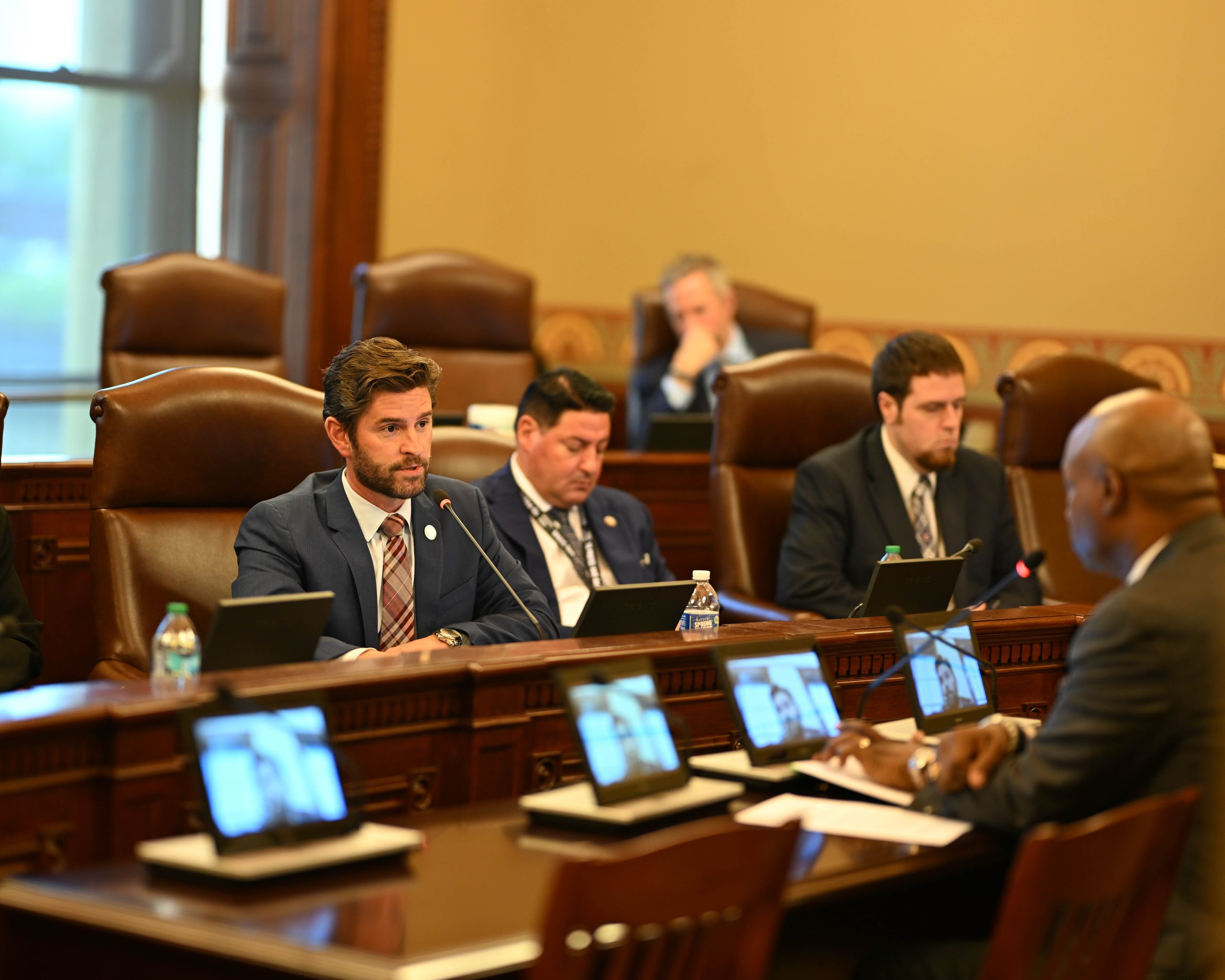
“Illinois Democrats will stop at nothing to preserve their corrupt political power. This Amendment will disenfranchise voters for decades to come and solidify our state as the gerrymandering capital of America,” said Rep. Ryan Spain following House passage of House Joint Resolution Constitutional Amendment 28.
HJRCA 28 is a constitutional amendment filed by Democrats that would change the long-standing fairness standard in the Illinois Constitution used to judge legislative maps. HJRCA 28, was filed just this week by Speaker Chris Welch in response to concerns over a case currently before the U.S. Supreme Court, Louisiana v. Callais. The proposal would rewrite Illinois’ constitutional standard for drawing legislative maps.
Under the current standard, maps must be “compact, contiguous and substantially equal in population.” Welch’s proposal would instead create a ranked list of five criteria.
The Amendment to amend the Legislature Article of the Illinois Constitution on decennial redistricting to require Legislative and Representative Districts to be drawn, in order of priority: (1) to be substantially equal in population; (2) to ensure that no citizen is denied an equal opportunity to participate in the political process and to elect representatives of his or her choice on account of race; (3) to create, where practical, racial coalition or influence Districts; (4) to be contiguous; and (5) to the extent practicable, to be compact. The current requirements are compact, contiguous, and substantially equal in population.
Compactness is moved to the bottom of the list and qualified by the phrase “to the extent practicable.” House Republicans argue that change would significantly weaken the compactness requirement and point to their lawsuit filed last year which alleges maps passed by Democrats violate Illinois’ compactness standard in 52 of the state’s 118 House districts.
Rep. Ryan Spain voted NO in both Executive Committee and on the Illinois House floor. The bill passed on Thursday afternoon by a vote of 74-38 and will now go on the State Senate.