March 17, 2026
Today is Primary Election Day in Illinois

Today is Primary Election Day in Illinois! This is your last day to vote in the Primary Election to select each party’s nominees for the General Election, which will see races for US Senate, US House, State House, some State Senate seats, and many County-level officials like County Board, Sheriff, and Treasurer. Polls are open 6a-7p TODAY ONLY!
Economic Reports bring Illinois’ fiscal picture into focus

“Everything is too damned expensive,” Governor Pritzker said during his budget address last month. But instead of taking responsibility for Illinois’ struggling economy, continued outmigration, and high tax burden, the governor once again pointed fingers at Washington, D.C.
Illinois families know these problems didn’t suddenly appear in 2025. After years of one-party rule and policies under Governor Pritzker, families are being taxed out of the state and economic growth continues to lag behind the rest of the country. Recent reports from Moody’s Analytics and WalletHub help explain why.
Moody’s Analytics Illinois Economic Forecast
· “Illinois’ economy will underperform the Midwest and the U.S. in the coming year.”
· “Below-average population trends and deep-rooted fiscal problems such as mounting pension obligations and a shrinking tax base represent the biggest hurdles to stronger economic performance.”
· “Persistent out-migration will weigh on the strength of employment and income gains.”
· “The state’s performance has been weaker than that of the region and the nation.”
WalletHub Report
· According to a recent WalletHub report, Illinois ranks No. 1 in the nation for the highest tax burden.
· Illinois’ overall state and local tax rates are 53% higher than the U.S. average.
· Illinois residents face one of the highest combined state and local tax burdens in the country.
· As a result, taxpayers in Illinois pay a larger share of their income in taxes than residents in most other states, putting additional pressure on families already struggling with rising costs of living.
Together, these reports paint a clear picture of Illinois’ weak economic outlook. High taxes, slow economic growth, and ongoing outmigration are warning signs that the state is moving in the wrong direction.
While Governor Pritzker continues to blame Washington, the reality is that years of overspending and tax hikes in Springfield have left Illinois families paying the price.
House Republicans are fighting to change that by putting forward policies that improve affordability and restore fiscal stability, including legislation like Representative Dan Ugaste’s HB 9, which would provide property tax relief for Illinois homeowners and Representative Ryan Spain’s HB 1383 to provide tax relief on tipped income.
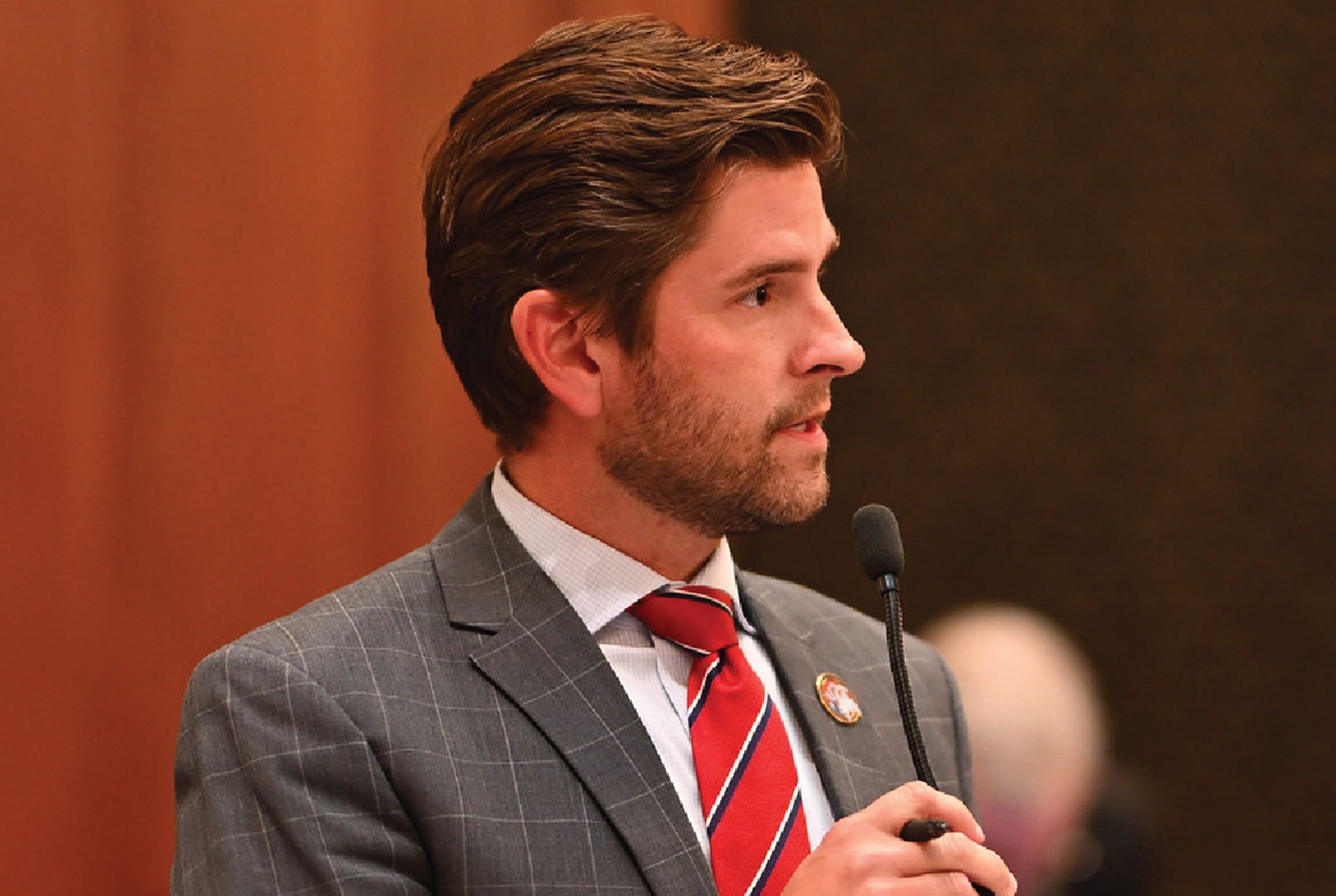
Rep. Spain: Governor Pritzker’s Latest Power Grab Targets Local Governments

Governor JB Pritzker has spent months attacking the federal government for overreach. Yet here in Illinois, he continues to push proposals that do the very same thing, taking away critical funding and stripping local control from communities across our state. Time and again, Governor Pritzker has tried to centralize more power in Springfield while leaving local governments with fewer resources and less authority.
Just look at his latest proposals:
Local Government Distributive Fund (LGDF) Funding Cut
- Governor Pritzker is proposing another cut to the Local Government Distributive Fund (LGDF), which would take roughly $60 million away from municipalities and counties across Illinois.
- These funds support essential local services such as emergency response, public works, and public safety.
- LGDF funding helps communities offset costs so local leaders can keep property taxes and fees lower for residents. LGDF accounts for 25% of costs for the day-to-day operations of cities and villages.
- When Springfield takes away these funds, local governments are left with fewer options and families are often left paying the price.
Building up Illinois Developments (BUILD) Illinois Strips Away Local Control
- During his budget address, Governor Pritzker proposed a sweeping zoning overhaul that would limit local governments’ authority over what can be built in their communities.
- The proposal would restrict municipalities’ ability to control development on property zoned for residential use.
- By weakening local input, Springfield politicians would gain more power to dictate what gets built in communities across Illinois.
- Illinois communities vary widely, and a one-size-fits-all mandate from Springfield will not solve every community’s housing challenges.
As Governor Pritzker moves to strip away funding and local control from municipalities across Illinois, he continues to centralize more power in Springfield. House Republicans are pushing back against Governor Pritzker’s proposals by advancing legislation such as Rep. Moore’s HB 4294, which Rep. Spain is a co-sponsor, to fully fund the Local Government Distributive Fund.
Poll: Most Illinois voters support opting into scholarship program

Nearly 55% of Illinois voters support the state opting into the Federal Scholarship Tax Credit Program. But it’s up to Gov. JB Pritzker to opt Illinois into the program. Only about one in five oppose him doing so.
More than half of Illinois voters support the state opting into a federal program to let donors help students find extra academic help, according to a new poll.
Only 22% oppose or strongly oppose the move.
Nearly 55% of 579 registered Illinois voters favor the state opting into the Federal Scholarship Tax Credit program. The voters were polled Feb. 9-11 by M3 Strategies for the Illinois Policy Institute. […]
Illinois has until Jan. 1 to opt into the Federal Scholarship Tax Credit Program. Doing so would mean students could begin taking advantage of these extra education dollars as soon as next year.
Students in public or private schools can use the scholarship money for educational services such as tutoring, additional educational classes, books or online educational materials, fees for standardized or college admissions exams and fees for dual enrollment.
That means public school students who may be struggling in certain academic areas or needing extra help or materials won’t have to leave their local public school for the support or opportunities they need.
The money also can be used for educational therapies for students with disabilities enrolled in the public school system or in a private or homeschool.
The Federal Scholarship Tax Credit Program will not divert federal or state money from public schools. There is no cost to states — only the benefit of more help for students.
The scholarships are donated by taxpayers, who will get an annual dollar-for-dollar federal tax credit of up to $1,700 for a qualified contribution to a scholarship-granting organization.
If Illinois does not opt into the program, state residents can still get the tax credit, but the scholarship money would go elsewhere. No Illinois students would be eligible for the funds.
Rep. Ryan Spain is a supporter of the program, and a co-sponsor of House Resolution 427, pushing for Illinois’ opt-in to access these scholarship funds.
The tax credit is federal and will take effect no matter what Illinois decides. With broad support for opting in among Illinois, state leaders’ response should be clear.
Former co-conspirator, Fidel Marquez, sentenced in Madigan corruption case

Ties between convicted ex-Speaker Michael J. Madigan, ComEd, and the Madigan insiders who took ComEd bribes upon instructions from the Madigan machine, were at the heart of the former Illinois political kingpin’s trial, conviction, and sentencing in 2025. A key witness in the case, Fidel Marquez, has been sentenced to two years’ probation for his participation in the wrongdoing. The probation sentence was related to Marquez’s agreement to wear a wire.
“Sadly, the corrupt Madigan Way has survived and strengthened in Illinois government, despite all the recent federal convictions,” said State Representative Ryan Spain. “The federal government should not have to keep cleaning up our mess. The people are fed up and frustrated with the way business is done in Illinois. It’s time for the Governor and Illinois Democrats who control state government to hear the message from the people and clean up our state.”
As ComEd’s chief governmental affairs executive, Marquez had been a facilitator of do-nothing ComEd contracts. In these arrangements, Madigan and his inner circle would recommend specific names to ComEd, and ComEd would then contact these people and offer them contracts as ‘coordinators’ and ‘developers.’ It was understood by all parties that no work would be carried out in return for these ComEd payments. When the Madigan case went to the jury, the panel found that ComEd had carried out a massive conspiracy to bribe Madigan. In return for these bribes, the powerful Speaker facilitated the enactment and passage of ComEd-friendly legislation in Springfield.
Learn more about the 73rd Legislative District and view a map here.